Where the Water Remembers: A Pilgrim's Descent into the Jordan River
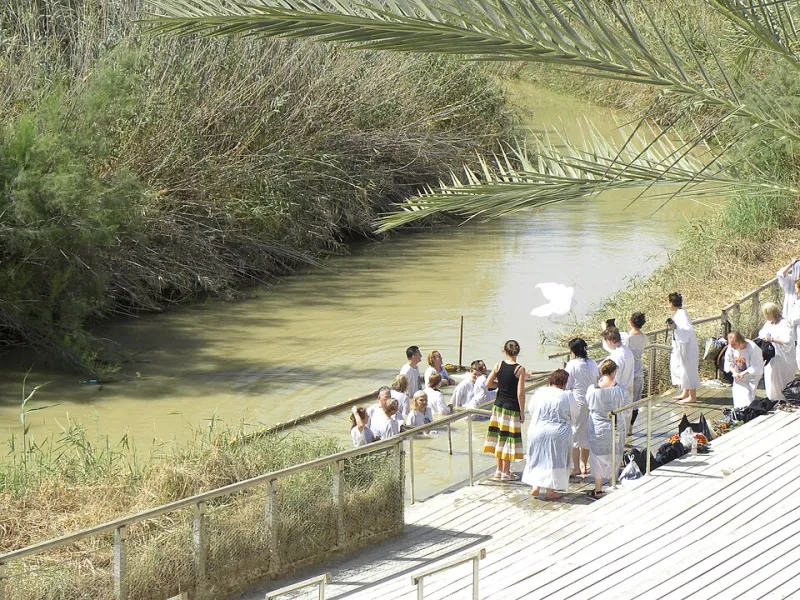
Photo: Ian Scott, CC BY-SA 2.0, via Wikimedia Commons
The Long Road to a Short River
There is a moment every pilgrim remembers: the instant the bus rounds the final bend and the Jordan River appears — narrower, quieter, and greener than any of us had imagined. For a river that carries the weight of Scripture, the Jordan is surprisingly modest. And yet, as our guide reminded us, it was never the river's size that mattered. It was what happened in its water.
I had traveled from Atlanta with a church group of forty-two believers, most of us in our fifties and sixties, several of us baptized as infants and never since immersed. We had come, as millions have before us, to stand where John the Baptist stood.
Two Sites, Two Experiences
Pilgrims today have two primary gateways to the Jordan's baptismal waters, and they could not be more different.
Yardenit, near the Sea of Galilee where the river exits southward, is the more polished experience. Operated by kibbutzim on the Israeli side, it offers shaded walkways, gentle steps into the current, wheelchair access, and — somewhat to the amusement of our group — a well-stocked gift shop and a wall bearing the text of Mark 1:9-11 in dozens of languages. White robes can be rented on-site for a modest fee, and changing rooms are clean and plentiful.
Qasr al-Yahud, further south near Jericho and close to where tradition locates Jesus' own baptism, is wilder and more atmospheric. The site sits within a military-coordinated zone; you pass through a checkpoint, and on the far bank you can see pilgrims on the Jordanian side, close enough to wave to. The stone steps descend directly into the river, and the surrounding landscape — raw, sun-scorched, punctuated by ancient monastic ruins — feels closer to the wilderness of the Gospels.
Our group visited both. If you can manage it, I recommend the same. Yardenit is ease; Qasr al-Yahud is awe.
The Logistics No One Tells You About
Before you go, a few practical truths:
- Bring a change of clothes. Even if you only wade ankle-deep, you will get wet. Quick-drying clothing and water shoes are worth their weight in gold.
- Robes and towels are available at both sites, but lines form quickly in the morning. Arrive early — by 8:30 a.m. if possible — to beat the tour bus crowds.
- Modesty matters. Most sites provide white robes over your swimsuit, but many pilgrims wear lightweight shirts and leggings beneath them out of respect.
- Leave valuables on the bus. The banks are busy, and there is nowhere secure at the water's edge.
- Hydrate. The Jordan Valley heat, particularly from May through September, is unforgiving for American visitors accustomed to air conditioning.
The Crowd You Didn't Expect
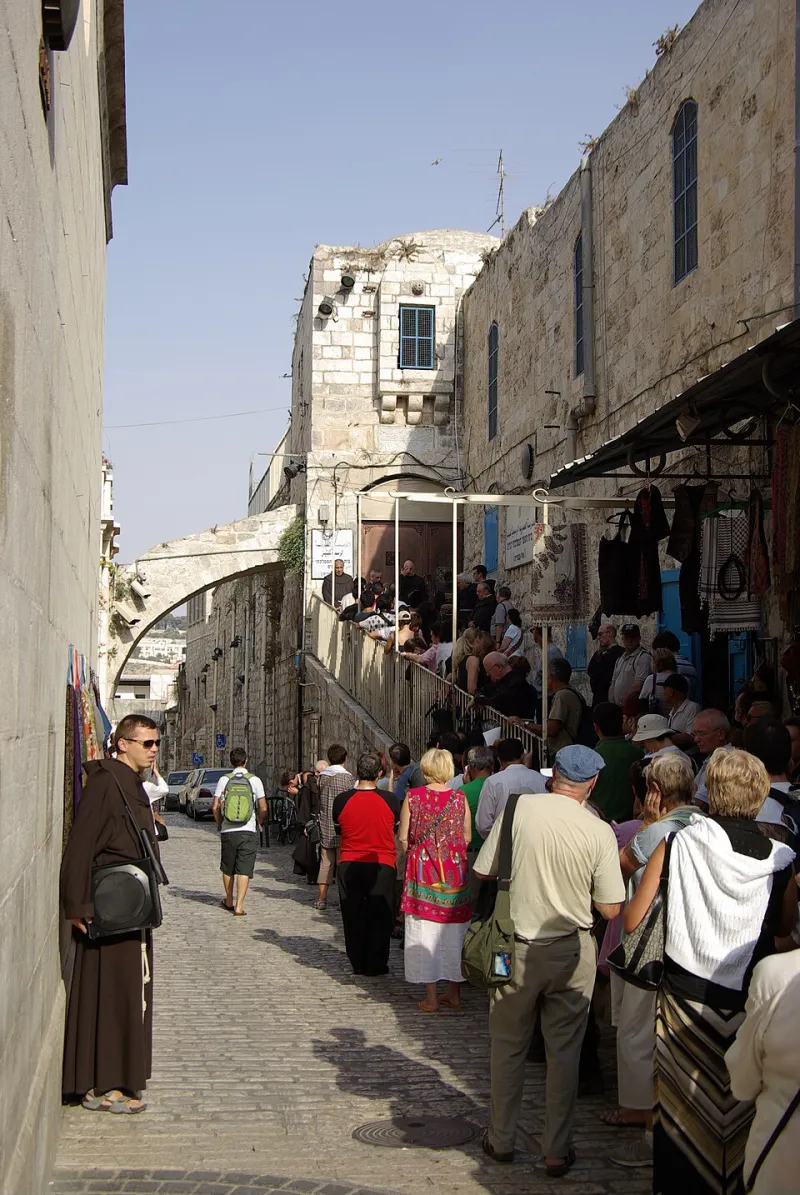
Nothing quite prepares you for the communion of strangers at the riverbank. On the morning we visited Qasr al-Yahud, we shared the water with a Nigerian choir singing in harmonies that floated over the current, a group of Korean Methodists kneeling in silent prayer, Brazilian Pentecostals weeping with joy, and a Lutheran family from Minnesota — the Johnsons, from just outside Duluth — whose patriarch had waited sixty years for this moment.
Vendors line the approaches to both sites, selling bottles of river water, olive-wood crosses, and baptismal certificates suitable for framing back home. Some pilgrims find this jarring. I confess I came to see it differently. Commerce has crowded holy places since the Temple itself, and if a laminated certificate helps a grandmother in Ohio remember the day she recommitted her life, I will not begrudge the vendor his stall.
Preparing the Heart Before the Feet
The water is only water. Our pastor said this the night before, during a devotion in the hotel courtyard, and it reframed everything. The Jordan does not save; it testifies. What happens in that river is what the pilgrim brings to it.
Our group prepared in three ways:
- Confession beforehand. We gathered in small groups the evening prior and, following 1 John 1:9, named aloud what we wanted to leave in the river.
- Scripture in advance. We memorized Romans 6:4 — "buried with him through baptism into death... that we too may live a new life" — so the words would be on our lips, not just in our programs.
- Expectation of emotion. Several of us, myself included, are not easily moved. We were moved anyway. Prepare for tears; they are common and nothing to be ashamed of.
Down Into the Water
When my turn came, the pastor took my arm, and we stepped together off the stone ledge. The current pulled gently at my calves — stronger than expected, cool and alive. He asked the ancient question. I gave my answer. And then, for a breath that felt longer than a breath, I was under.
I came up to the sound of singing and the sight of forty-one friends cheering from the bank like it was a fourth-quarter touchdown. I am aware of how that sounds. It is exactly how it felt.
Coming Home Different
On the flight back through Newark, a woman from our group showed me her certificate and said, quietly, "I've been a Christian my whole life. But I feel like I finally know whose I am."
That is what the Jordan offers. Not magic in the water, but memory in the soul — the embodied knowledge that the God who stepped into that river two thousand years ago still steps into ours. Go if you can. The water is waiting, and it remembers.
Planning your own baptismal pilgrimage? Explore our complete guide to Holy Land itineraries in the Pilgrimage Journeys archive.