The Desert's Unhurried Voice: Recalibrating a Wired Pilgrim in Judea
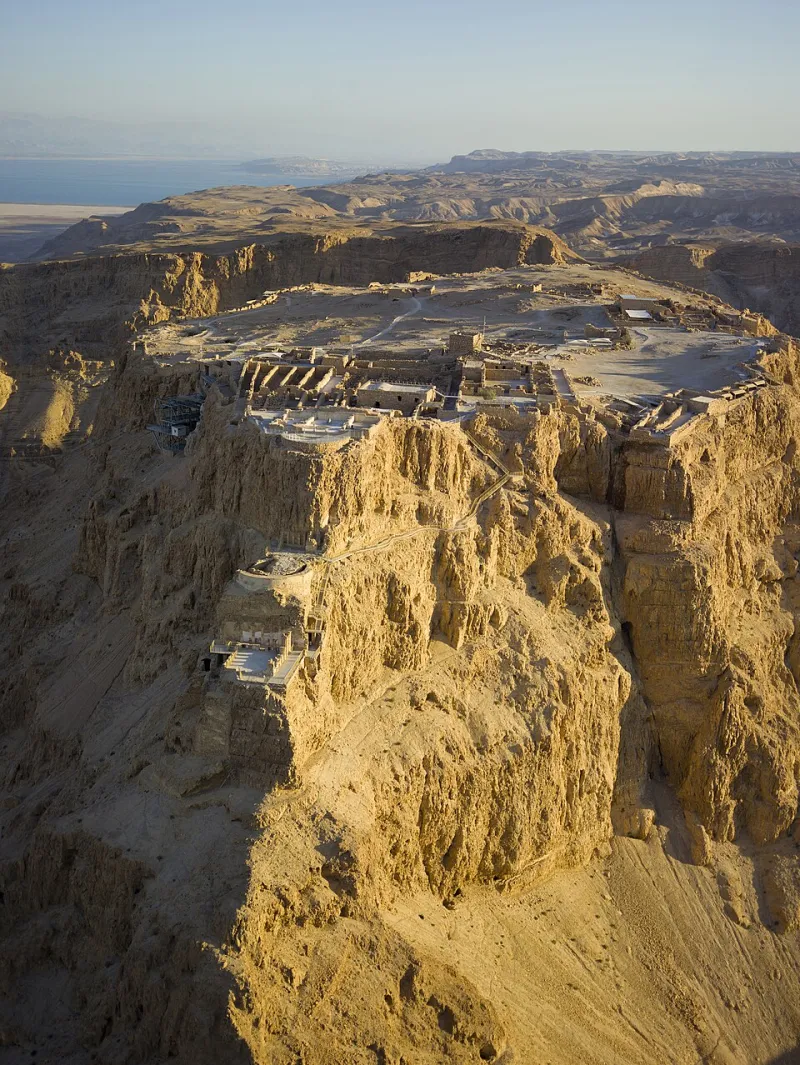
Photo: Godot13, CC BY-SA 4.0, via Wikimedia Commons
The road from Jerusalem to Jericho begins with a turn that feels almost casual. Within minutes the city thins to stone walls and scrub, and then the land opens into the Judean wilderness—a landscape of chalk, dust, and sudden ravines that refuses to entertain. For the American pilgrim accustomed to convenience, the first sensation is not inspiration but exposure. The phone loses its signal. The air loses its softness. The itinerary loses its authority.
That is the point.
A Landscape That Subtracts
Judea's desert is not empty in the way a blank page is empty. It is full of Scripture, though not the kind that announces itself. Here David fled Saul among the strongholds of En Gedi. Here the psalmist learned to pray in a dry and weary land. Here prophets spoke of streams in the desert and a highway for God. The wilderness does not compete with the noise of the world; it subtracts from it. What remains is the pilgrim, the sun, the stones, and the God who is not impressed by hurry.
For a wired American, that subtraction can feel like a threat. We are trained to fill silence with input and to measure a day by its yield. The desert gently refuses both habits. It offers no Wi-Fi, no gift shop, no interpretive video. It offers only the older curriculum of thirst, distance, and attention.
The Spirit Led Him There
Matthew says that Jesus was led by the Spirit into the wilderness to be tempted by the devil. The wilderness was not an accident of geography or a detour from ministry. It was part of the Spirit's intention. Jesus fasted forty days and forty nights, and then the tempter came with bread, spectacle, and power. The answers Jesus gave were not clever strategies. They were quotations from Scripture, spoken by a man who had been listening in the silence.
American pilgrims often ask what they should see in the Holy Land. The Judean wilderness asks a different question: what would you hear if the notifications stopped? The desert is not a workshop for self-improvement. It is a place where the heart is exposed. That exposure can be uncomfortable, but it is also a mercy. The wilderness does not make us holy; it makes us honest.
Practical Mercies for a Desert Day
A desert day should be planned with care, even if its purpose is to slow down. Travel with a licensed guide who knows the terrain, weather, and local conditions. Carry more water than you think you need—three liters per person is a reasonable minimum for a short outing—along with a hat, sunscreen, and sturdy shoes. Start early. Avoid the midday heat. Never wander off marked paths, and never enter a wadi when rain is forecast, even if the sky above you is clear. Flash floods are not a metaphor in this landscape.
Choose a site that allows contemplation rather than a rushed circuit. An overlook above the Jericho road, a quiet corner of Wadi Qelt, or a guided walk near the traditional wilderness of Jesus' temptation can be enough. Put the phone in airplane mode if it has signal at all. Carry a small Bible, not a library. Read one passage slowly. Sit for twenty minutes without speaking. The goal is not to cover ground but to recover attention.
The Temptations We Pack
The wilderness exposes the temptations we carry with us. Bread becomes the anxiety of consumption—the belief that we must secure every need on our own terms. The pinnacle becomes the hunger for spectacle—the need to be seen, to perform, to turn faith into a platform. The kingdoms of the world become the itch for control—the fantasy that the right itinerary, the right contacts, or the right experiences can give us mastery over our lives.
Jesus answered each temptation with Scripture, not with self-confidence. That is a useful pattern for pilgrims. The desert is not a place to prove our spiritual seriousness. It is a place to remember that we live by every word that comes from the mouth of God. The wilderness cure is not a technique we master. It is a gift we receive when we stop long enough to hear the unhurried voice of God.
Returning With Sand in Your Shoes
Most pilgrims cannot stay in the desert. They return to rental cars, airports, and the ordinary demands of work and family. But the wilderness can travel home as a discipline. Ten minutes of silence before the first email. One hour each week without a screen. A short walk without a podcast. A verse memorized and carried into the day. These are small habits, but they honor the lesson of Judea: God is not in a hurry, and neither must we be.
When you go, do not treat the wilderness as a checkbox between Masada and the Dead Sea. Treat it as a chapel without walls. Let the silence be awkward. Let the scarcity teach you something about abundance. Let the Scripture you read there become the voice you follow when the noise returns.