The Hour Before the World Wakes: Meeting Jesus at Dawn on Galilee's Shore
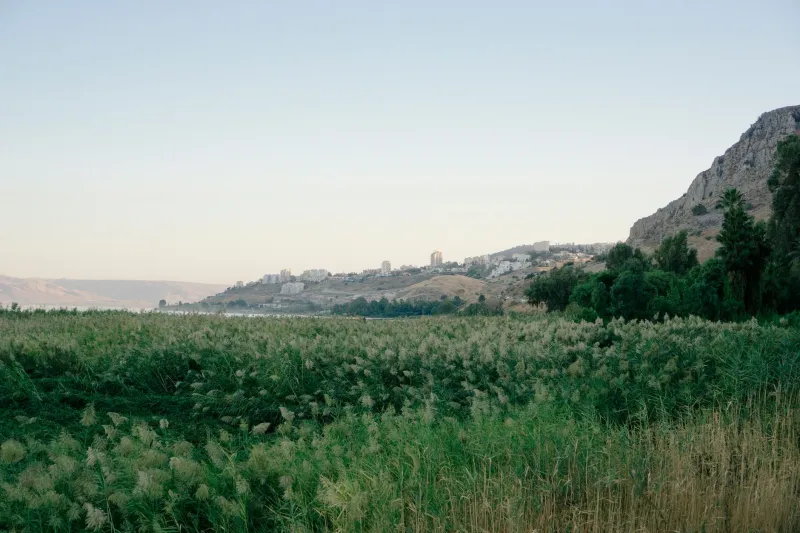
There is a particular kind of silence that settles over the Sea of Galilee in the hour before sunrise. American travelers, conditioned by the urgency of red-eye flights and packed itineraries, often arrive in Israel determined to see everything. Yet the pilgrims who leave with the deepest impressions are frequently the ones who sacrificed a night's comfort to stand on a quiet shore while the sky was still dark.
If your journey includes the Galilee region, and most do, we encourage you to set your alarm. What waits at dawn cannot be photographed at noon.
A Shoreline That Still Speaks
Capernaum sits on the northwestern edge of the lake, its black basalt ruins glowing faintly in the early light. This was Jesus's ministry headquarters, the town Matthew's Gospel calls "His own city." Here, Peter's house stood. Here, the centurion built a synagogue. And here, along these very pebbled beaches, a carpenter from Nazareth called fishermen to leave their nets.
When you stand on this shoreline at first light, the geography itself becomes a homily. The lake stretches nearly thirteen miles long, and from the shore at Capernaum you can trace the curve of the coastline toward the Mount of Beatitudes and the traditional site of the feeding of the five thousand. The distances are walkable. That realization alone transforms how you read the Gospels forever.
The Breakfast on the Beach
The seventh chapter of human history's most-read book opens not with thunder but with charcoal. John 21 records that after the resurrection, seven disciples returned to Galilee and fished through a fruitless night. At daybreak, a figure on the shore called out, "Children, have you any fish?" He then directed them to cast their nets on the right side, and the catch was overwhelming.
By the time they reached land, Jesus had already prepared a fire of coals with fish laid on it, and bread. He invited them, simply, to come and eat breakfast.
Scholars of the biblical text have long noted that the narrative places this scene at dawn, the same transitional hour when the risen Christ could be mistaken for a stranger. There is something instructive in that timing. The disciples met the resurrected Lord in the place of their ordinary labor, at the hour when they were tired and discouraged, and He met them with provision they had not earned.
Standing on that beach as the sun climbs over the Golan Heights, you begin to understand why the Evangelist bothered to mention the coals, the bread, the count of the fish. The details are an invitation to imagine the morning fully.
Practical Guidance for the Early Riser
For American pilgrims planning this experience, a few notes will help:
- Stay close to the water. Lodging in Tiberias, or better yet the small guesthouses and kibbutz hotels near Capernaum and Tabgha, allows you to walk to the shore in minutes rather than arriving after daybreak.
- Check the season. Summer sunrise arrives early, often before 5:30 a.m., while winter dawns closer to 6:30. Either way, allow yourself at least ninety minutes of unhurried time.
- Bring layers. Even in warm months, the lake air is cool before the sun rises, and a windbreaker makes the vigil comfortable.
- Carry a Bible or a printed passage. Reading John 21 aloud on the beach, quietly, while the water laps the stones, is an experience many pilgrims describe as the spiritual summit of their entire trip.
- Respect the sites. The archaeological garden at Capernaum opens later in the morning, but the public shoreline is accessible, and the Franciscan grounds near the church of the Primacy of Peter offer contemplative space.
Letting the Landscape Preach
There is a temptation, on any pilgrimage, to treat the Holy Lands as a collection of photo opportunities to be collected and posted before lunch. The Galilee resists that treatment. It is not a museum; it is a living body of water with weather, moods, and rhythms that have not changed since the first century.
When a sudden squall still races across the lake in the afternoon, as it famously can, the stories of Jesus calming the storm stop being abstractions. When the morning mist lifts off the water and the hills behind Capernaum turn gold, the phrase "the people who sat in darkness have seen a great light" becomes less a verse and more a description of what is happening in front of you.
This is the quiet argument for rising early. The crowds, the gift shops, and the tour guides all have their place. But the shoreline at dawn belongs to the pilgrim alone, and in that solitude many travelers report something rare: an unhurried sense that they are not merely visiting history but being visited by it.
Before You Go
Build the dawn vigil into your itinerary deliberately, and tell your group or guide in advance so no one is left behind in the dark. Then, when the sun finally breaks the ridge and spills across the water, do what the disciples did two thousand years ago. Stay a while. Eat your breakfast slowly. And listen for the question that has echoed off this shore ever since: Do you love Me?
The lake will still be there when the buses arrive. But the hour before the world wakes is yours, and it may well be the morning you remember for the rest of your life.