The Unfilled Day: Reclaiming Sabbath Rest on a 2026 Holy Land Itinerary
The modern American pilgrimage is often planned like a product launch. There is a spreadsheet of sites, a daily quota of photographs, and a quiet fear that someone back home will ask whether we saw everything. The Holy Land is treated as a once-in-a-lifetime opportunity, which is true, but the phrase is often used to justify exhaustion. In 2026, the most countercultural item a pilgrim can add to a Holy Land itinerary may be a day with nothing on it.
The Commandment We Treat as Optional
Sabbath is not a minor biblical theme. It is built into creation, commanded at Sinai, and repeated in Deuteronomy as a practice of remembering deliverance. Yet many American Christians treat rest as a reward for finished work rather than a command from a liberating God. We spiritualize the Sabbath into a vague principle and then schedule over it. A pilgrimage to the land of the Bible is a good place to recover what we have misplaced.
A Theology of Stopping
To stop is to declare that the world does not depend on our labor. That is the heart of Sabbath. It is not merely a pause for refreshment; it is an act of trust. The pilgrim who refuses to stop is making a theological statement, whether or not they intend to: that the Holy Land must be mastered, that God's presence must be captured by our effort, that the itinerary is the measure of the journey.
The Bible offers a different measure. Jesus said that the Sabbath was made for man, not man for the Sabbath. Rest is a gift before it is a rule. On pilgrimage, that gift takes a concrete form: we cannot see everything, and we do not need to. The land is not a checklist to complete. It is a place to receive.
What an Empty Day Looks Like
An empty day does not mean an aimless day. It means a day with a different center. Choose a twenty-four-hour window—Saturday is the most natural in Jerusalem, though the rhythm can be adapted—and protect it from the itinerary. Sleep without an alarm. Attend worship with a local congregation if you can. Eat a slow meal. Read one passage of Scripture without commentary. Walk without a destination. Take a nap. Pray in the evening.
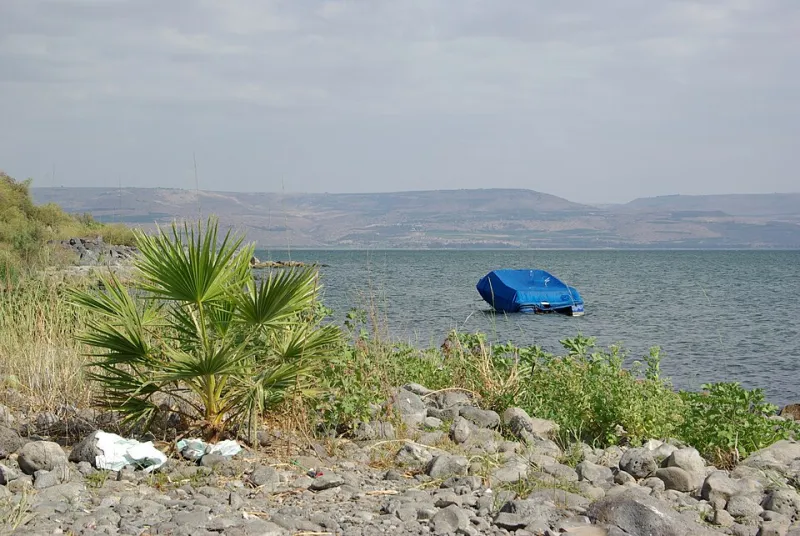
In Jerusalem, that might mean staying near the Old City without rushing through its gates. In Galilee, it might mean sitting by the shore with Mark 4 open on your lap, watching the water that Jesus calmed. The specifics matter less than the posture: you are not producing an experience. You are receiving one.
The Cost of an Overpacked Itinerary
Overpacked pilgrimages produce a predictable harvest: irritability, spiritual amnesia, and photographs that no one remembers taking. We return home exhausted and call it full. But the Holy Land does not require us to sprint through it. The Gospels themselves are unhurried. Jesus repeatedly withdraws, prays, and sleeps. If the Son of God needed silence and rest, the American pilgrim with a week of vacation and a bucket list should take notice.
Trading Exhaustion for Attentiveness
A Sabbath stop is not a gap in the itinerary. It is a gentle challenge to the assumption that more is always better. Before you book your 2026 pilgrimage, block out one day and defend it. Tell your group leader that you are keeping it. Tell yourself that the land will still be there after you rest. The goal is not to see less for the sake of laziness. The goal is to see at all.
The pilgrim who stops discovers that attention is a form of worship. The unplanned day becomes a place where God can speak without competing against the next departure time. In a land crowded with holy sites, the most sacred space may be the one you leave empty.