Before the Breaking of the Bread: What Emmaus Asks of the Modern Pilgrim

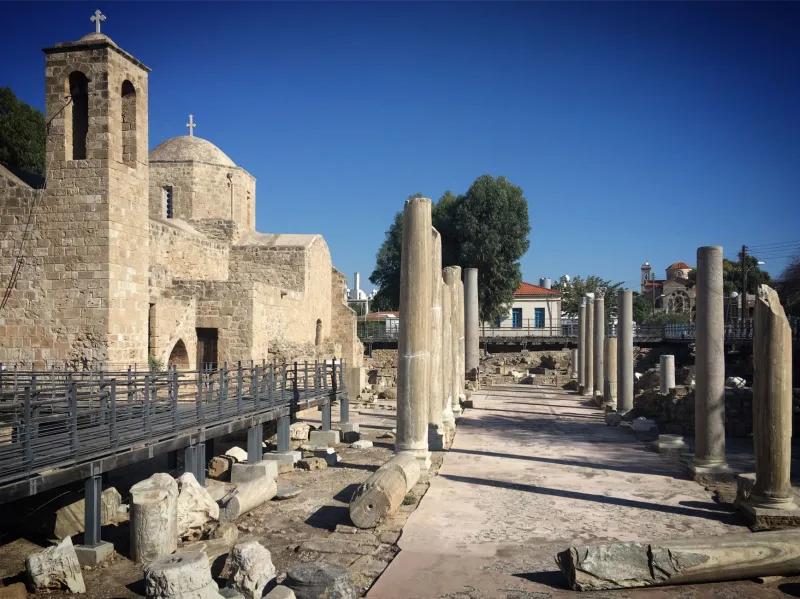
Photo: Gordon Leggett, CC BY-SA 4.0, via Wikimedia Commons
The road from Jerusalem to Emmaus is short enough to walk in a day and long enough to contain a lifetime of grief. Luke tells us the distance was seven miles. Two travelers set out after the crucifixion, speaking of all that had happened, their hopes collapsed and their future unclear. Then a stranger drew near and kept pace.
That detail deserves more attention than it usually receives. The risen Christ did not appear in a burst of light to scatter their sorrow. He walked. He asked questions. He listened. Only later did He open the Scriptures, and only at the table did their eyes recognize Him. For the modern pilgrim, Emmaus is less a destination than a disposition—a way of traveling that trusts Christ to be present before He is perceived.
A Road Measured in Conversation
Emmaus begins with disappointment. Cleopas and his companion were leaving Jerusalem, the city of promise, and returning to an ordinary village. Their conversation was not a theological seminar but a rehearsal of pain. Jesus entered that conversation as a stranger, and He did not begin with correction. He began with a question: “What are you discussing?”
The question was not ignorance. It was invitation. Christ made room for them to speak honestly before He spoke truth. Pilgrims today often arrive in the Holy Lands with an itinerary full of sites and a heart full of unspoken burdens. Emmaus suggests that the first act of pilgrimage is not to see but to speak—and to let Christ draw near in the speaking.
The Discipline of Walking at Another’s Pace
American travel is often measured by efficiency. We count landmarks, optimize routes, and treat waiting as failure. Emmaus quietly dismantles that logic. Jesus adjusted His pace to theirs. He did not hurry them toward revelation. He walked with them in the very direction they had chosen, even though it led away from the place where the story would soon send them back.
For groups preparing to visit Israel, this is a practical word. A pilgrimage is not a race through sacred geography. It is a shared walk. The companion who lags behind may be carrying grief. The traveler who asks the same question twice may be learning to trust. Walking at another’s pace is not inefficiency; it is hospitality of the body, and sometimes it is the first form of witness.
Scripture as Travel Companion
On the road, Jesus began with Moses and all the prophets and interpreted to them what the Scriptures said concerning Himself. He did not hand them a verse card. He opened the whole story. Their hearts burned within them, though recognition still waited.
Pilgrims do well to carry a Bible into the land, not as a prop but as a companion. Read Luke 24 before departure. Read it again on the bus, on the trail, in the quiet of a hotel room. Let the texts of promise and suffering reframe what feels like disappointment. The burning heart is often the first sign of Christ’s presence, arriving before the eyes are opened.
The Table That Reveals
At evening, the two travelers urged the stranger to stay. Hospitality became the hinge of the story. When He took bread, blessed it, and broke it, their eyes were opened. Then He vanished.
The recognition did not come in a dramatic vision. It came in an ordinary meal. This is a quiet rebuke to the pilgrim who expects God only in the spectacular. The Holy Land is full of remarkable places, but the Emmaus pattern suggests that Christ is often recognized at a shared table—a church supper, a small-group gathering, a simple meal with fellow travelers. The pilgrim’s final destination is not a site to be photographed but a table to be shared.
A Practical Guide for the 2026 Pilgrim
For those planning a journey in 2026, Emmaus offers several durable practices:
- Build margin into the itinerary. Leave room for the unhurried conversation that cannot be scheduled.
- Choose a walking companion—or become one. Ask questions before offering answers.
- Carry a Bible and read the road texts along the way. Let Scripture interpret the landscape.
- Plan for a table experience. Eat with local believers or fellow pilgrims and resist the urge to rush.
- Expect recognition to come later than you wish. The road is not a failure if clarity tarries.
When the Road Remains Long
The Emmaus story does not end on the road. The two travelers rose that same hour and returned to Jerusalem, where they testified that the Lord had risen. Their journey moved from grief to witness, from private sorrow to public hope. The road became a commission.
Many pilgrims will return home before every question is answered. That is not a lack of faith. It is the Emmaus pattern. Christ joins us before we recognize Him, opens the Scriptures before our hearts understand, and reveals Himself in the breaking of bread before the journey feels resolved. The pilgrim’s task is not to force resolution but to practice presence—to walk, to listen, to break bread, and to watch for the stranger who is already the Lord.