Where the Waters Stirred: Bethesda and the Question That Finds Us Waiting
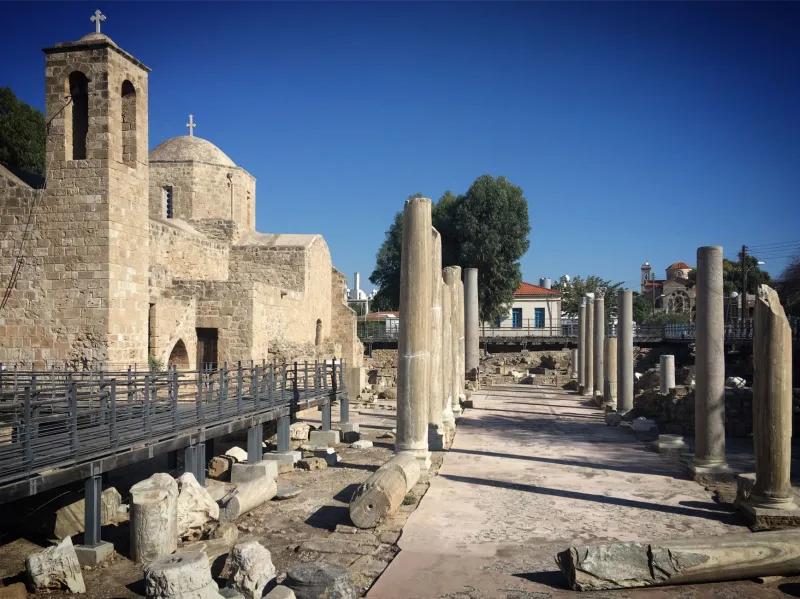
On a shaded slope just inside Jerusalem’s Lions’ Gate, a short walk from the clamor of the Via Dolorosa, stone steps descend into a hollow that many tour groups pass without pausing. The air cools. The noise fades. And there, beneath the level of the street, lie the remains of the Pool of Bethesda—two rectangular basins, fragmentary arches, and the ghost of five porticoes that once sheltered the sick.
It is an unassuming place for a miracle. Yet the Gospel of John sets one of Jesus’ most searching conversations at this pool, and the question he asked there—Do you want to be made well?—still hangs over the ruins like the morning light that reaches down into the excavation.
A Site Beneath the City
For centuries, skeptics doubted the Pool of Bethesda because no such place could be found. Then, in the nineteenth century, excavations near the Crusader Church of St. Anne began to uncover a complex that matched John’s description with striking precision: twin pools divided by a wall, surrounded by colonnades, fed by an underground source. The site had been buried under layers of Roman, Byzantine, and later construction. What pilgrims now see is not a reconstruction but a genuine first-century water system, likely used for ritual purification near the Sheep Gate.
The five porticoes John mentions appear in the stonework. The depth of the pools—once far greater than today’s visible floor—reminds the visitor that this was a place of descent. Pilgrims came down to the water. The sick came down to wait. And it was down here, in the shadow of the colonnades, that Jesus found a man who had been ill for thirty-eight years.
The Man Who Did Not Answer
John tells us that a great multitude lay at the pool—blind, lame, and paralyzed—waiting for the water to stir. The man Jesus approached had been there a long time. His illness had defined his days, his relationships, and perhaps his identity. When Jesus asked, “Do you want to be made well?” the man did not say yes. He explained instead why no one helped him into the water, why another always stepped down first.
It is a painfully human response. Waiting can become its own kind of home. Hope deferred can settle into a quiet resignation that feels safer than expectation. Jesus did not argue with the man’s excuse. He simply spoke the healing: Rise, take up your bed, and walk. The man was made whole—and immediately became a problem, for it was the Sabbath, and carrying a mat was work. The religious authorities cared more about the rule than the restoration.
John records that later Jesus found the man in the temple and said, “See, you have been made well. Sin no more, that nothing worse befalls you.” The healing was not merely physical. It was an invitation to a new life, a new identity, a new way of walking in the world.
Waiting Rooms of the Pilgrim Life
American believers often travel to the Holy Land carrying their own Bethesda. A diagnosis that will not resolve. A prodigal child. A vocation that seems stalled. A prayer repeated so many times that the words have worn smooth. We know the pool is there—we believe the Healer is near—but the water has not stirred for us.
The site itself preaches a quiet sermon. Its pools are dry now. The colonnades are broken. The crowds are gone. Yet the question remains, and it is not a rebuke. Jesus asks it of the weary, the disappointed, and the chronically hopeful. Do you want to be made well? Not merely relieved, not merely distracted, but whole—even if wholeness requires a change of identity, a release of resentment, or a step into a future you cannot control.
Practical Notes for the Pilgrim
The Pool of Bethesda is accessed through the grounds of St. Anne’s Church, a Romanesque Crusader sanctuary that many visitors rank among the most moving stops in Jerusalem. The church is known for its extraordinary acoustics; groups often pause to sing a hymn, and the sound lingers in the stone. Modest dress is expected. The site is active as a place of worship, so conversation should be quiet and photography respectful.
Steps lead down to the ruins, and some areas are uneven. Travelers with mobility concerns should check access in advance or ask staff for the easiest route. Early morning is generally less crowded, and the light in the excavation is best before midday. The site is within walking distance of the Lions’ Gate, the Via Dolorosa, and the beginning of the Mount of Olives ascent, making it a natural addition to a morning pilgrim itinerary. Allow at least forty-five minutes—more if you intend to sit and pray.
Before arriving, read John 5:1–15 slowly. Carry a single question with you down the steps: Where am I still waiting? And when you return to the street, carry the Healer’s question back with you.