Pressed but Not Forsaken: A Pilgrim's Gethsemane
The road from the Mount of Olives descends steeply toward the Kidron Valley, and somewhere near the bottom the noise of Jerusalem begins to thin. Buses idle, tour guides lower their voices, and a company of pilgrims files through a wrought-iron gate into a shaded plot of ancient olive trees. This is Gethsemane—not a manicured garden in the decorative sense, but a working place remembered for its name. The word itself is tied to the olive press, the stone instrument that crushed fruit until oil ran out. For the pilgrim who pauses here, the name is not a footnote. It is the sermon.
A Garden Named for Pressure
Olive presses in the first-century world were not gentle machines. Olives were gathered, sometimes trodden, and then pressed beneath heavy stones until the pulp yielded its oil. The process was patient and violent at once: waiting for harvest, applying weight, collecting what flowed. That is the physical world behind the name Gethsemane. When the Gospels place Jesus here on the night of His arrest, they place Him in a garden whose very title suggests pressure.
The connection is not a clever preacher's invention. It is the plain witness of the text. Jesus prays, sweats, and asks that the cup pass from Him, while also surrendering to the Father's will. The garden does not soften the scene. It gives the scene a vocabulary. Here is the Son of God under weight, not merely near it. Here is prayer that does not float above the ground but falls to it.
For American believers accustomed to measuring spiritual health by momentum, Gethsemane is a necessary correction. The garden is not a place of productivity. It is a place of pressing. Nothing visible is being built there. No crowd is being won. A man is on the ground, praying, and the future of the world is being decided in a way that looks like weakness.
What the Press Taught the Pilgrim
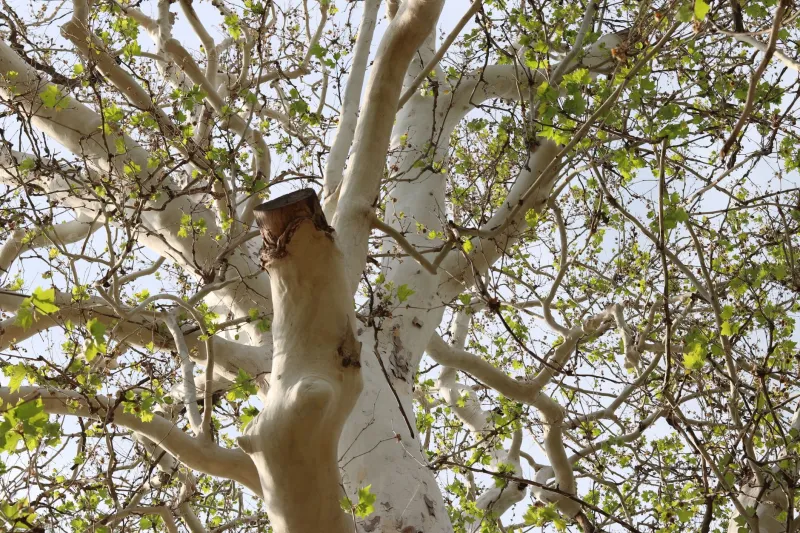
A visitor to Gethsemane today sees olive trees whose age is often exaggerated in popular retellings. The oldest trees in the garden are ancient, but the site has been contested and rebuilt across centuries, and pilgrims should resist the urge to treat every root as a relic. What the garden offers is not a guarantee that this tree stood over Jesus, but a living witness to the kind of place this was: olive cultivation, stone, shade, and silence at the edge of the city.
The silence is what many pilgrims remember. Jerusalem is not a quiet city, and the Mount of Olives is crossed by roads and visitors. Yet inside the garden walls, the air seems to change. The trees cast a dense shade. The stones are worn. The place invites a person to stop performing and start listening.
That listening is where the olive press becomes a devotional image. Pressure, in the biblical sense, is not always punishment. It can be the appointed means by which something hidden is brought out. Oil does not leave the olive without crushing. Faith does not always reveal its true shape without strain. This is not a promise that every hardship is good. It is a reminder that God is not absent from the places where we feel most compressed.
Churches at the Edge of the Garden
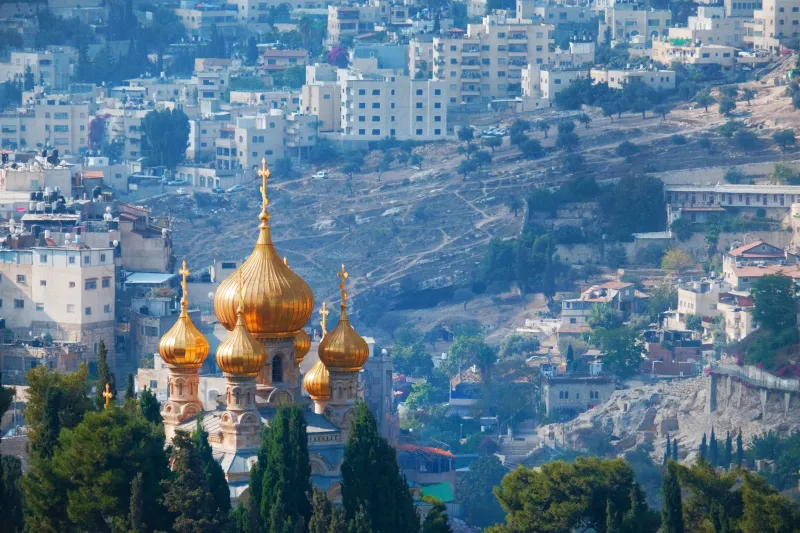
Pilgrims usually encounter Gethsemane through a cluster of holy sites. The Church of All Nations, also called the Basilica of the Agony, stands beside the garden. Its façade is marked by mosaics and its interior is often dim, with a rock of agony before the altar. The design draws the eye downward, toward the place of prayer rather than the place of spectacle. Just uphill, the Russian Orthodox Church of Mary Magdalene rises with golden onion domes that catch the afternoon light. Its garden and quiet precinct offer a different kind of stillness.
These buildings do not replace the garden. They frame it. They remind the pilgrim that Gethsemane has been prayed in, wept over, argued about, and loved for centuries. The churches also carry a warning against reducing the site to a photograph. A pilgrim can walk from bus to basilica to gift shop and miss the point entirely. The point is not that we have seen a famous place. The point is that we have been invited into a posture.
The Prayer That Does Not Escape
Jesus' prayer in Gethsemane is not a model of polished devotion. It is urgent, repeated, and honest. He asks for the cup to pass. He does not pretend that the cost is small. Yet He ends where faith must end: not in denial of the cost, but in surrender to the Father.
That pattern matters for believers facing their own seasons of pressure. Often we pray for escape first and treat surrender as a last resort. Gethsemane reverses the order. Honest prayer names the fear. Mature prayer then hands the fear to God without dictating the outcome. The garden does not teach us to call pain good. It teaches us to trust the Father in the pain.
The disciples, meanwhile, sleep. Their failure is not incidental. It shows how easily companions can be present in body and absent in spirit. For pilgrims from the United States, where schedules are tight and rest is scarce, the disciples' sleep can feel almost sympathetic. But the text is clear: the hour was serious, and they were not awake for it. Gethsemane asks whether we are willing to stay awake with Christ in the places where prayer is costly.
Lessons for the Pressed and Poured
A pilgrim leaves Gethsemane with more than a photograph of olive trees. The garden offers at least three quiet lessons.
First, pressure is not proof of abandonment. The most faithful Son who ever prayed was pressed to the ground. If Gethsemane is any guide, nearness to God does not always feel like ease.
Second, waiting is part of obedience. The olive press did not hurry. The garden prayer was repeated. Much of the Christian life is spent in the space between the request and the answer, and that space is not wasted.
Third, surrender is not passivity. Jesus rises from prayer and walks toward His arrest. He is not resigned in the sense of giving up. He is surrendered in the sense of giving over. There is a difference, and pilgrims who learn it find courage for the road ahead.
A Place to Return
On the way out, the path climbs again. The city returns. Traffic sounds rise. The pilgrim rejoins the ordinary world, which is where Gethsemane's lesson must be lived. Few of us will kneel beside that rock. But many of us will know the weight of a decision, the ache of a waiting season, or the fear of a cost we did not choose.
Gethsemane does not promise that the cup will be removed. It promises that the Father is present when the weight comes. The garden named for the press remains a place for the pressed—a place to pray honestly, stay awake, and trust that what is crushed in us may yet be poured out for something greater than we can see.